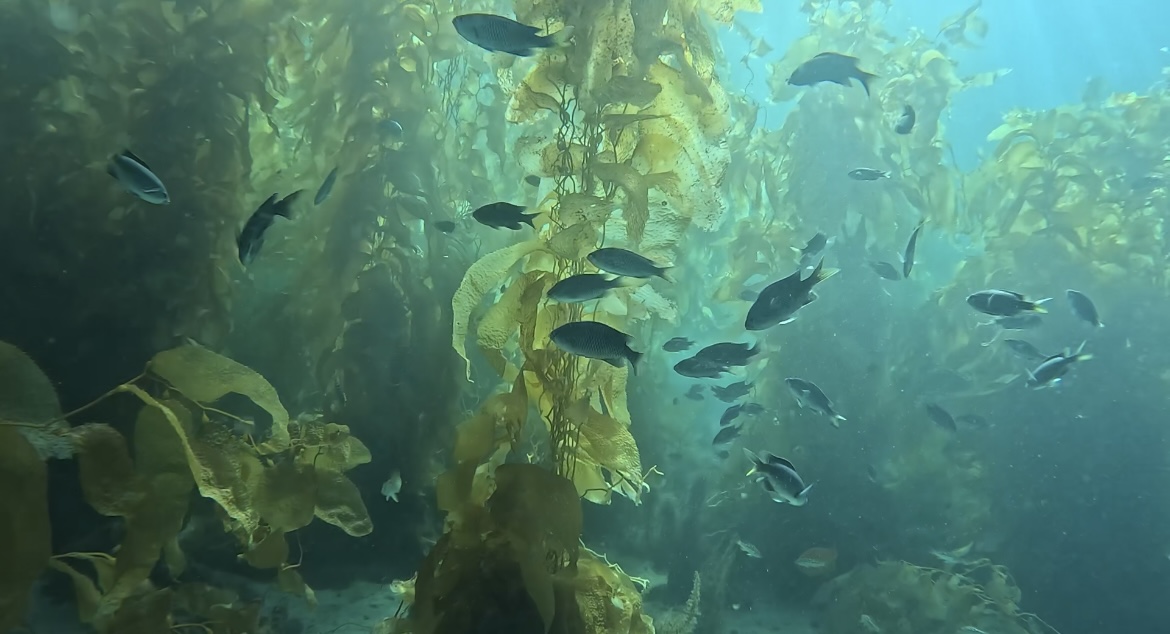
I find myself diving in one of the most magical places I have ever been. I am in an underwater forest with crystal clear water. Kelp stands tall and sustains a whole ecosystem; I see fish like Garibaldis and sheepheads, as well as seals, starfish, urchins, horn sharks, rays, snails, clams, lobsters, and many more! Everywhere I look is full of life. It is a dream to be diving in a healthy kelp forest.
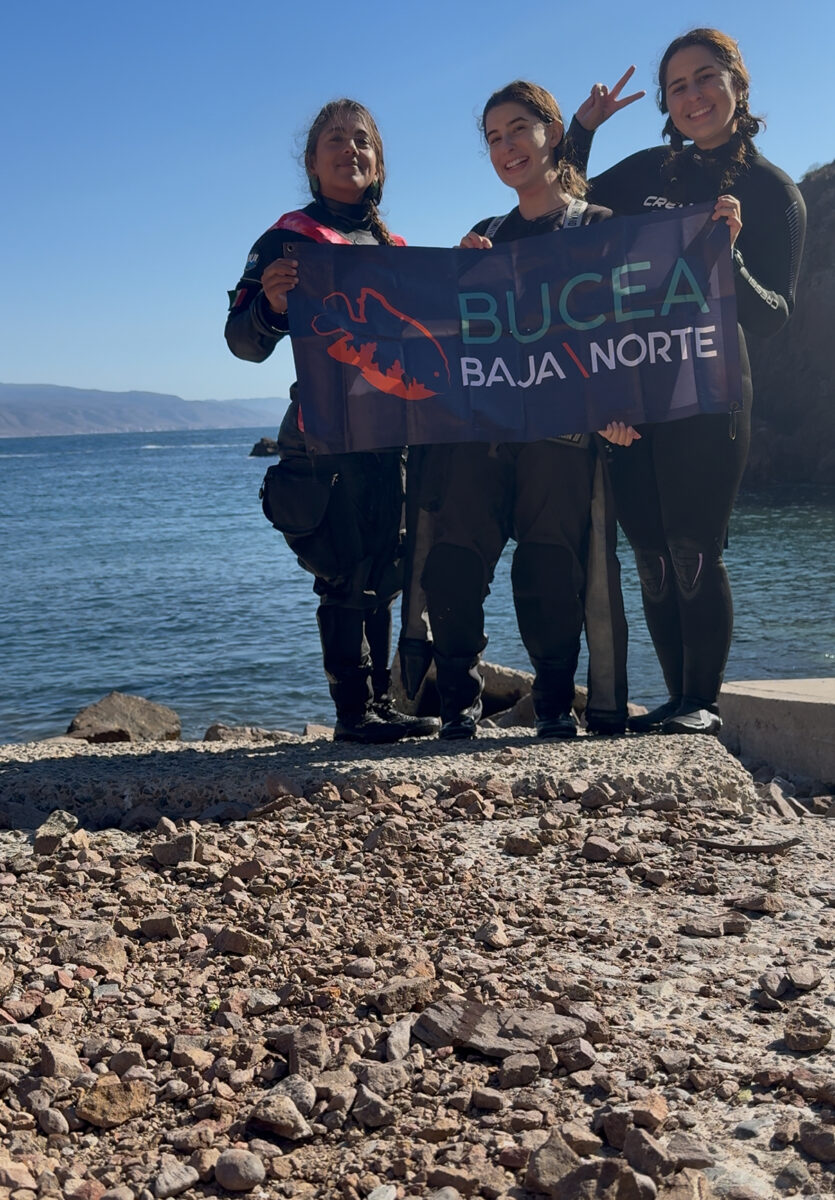
In preparation for an exciting but very challenging upcoming trip, I needed to get more experience diving in a drysuit. I decided to go to the only place in Mexico where it is actually cold enough to dive in a drysuit: Baja California. I joined Bucea Baja Norte, a dive shop in Tijuana owned by Jorge Román, where my friend Thalía Contreras works. During my time there, she helped me achieve my goal of gaining more experience in a drysuit while exploring beautiful places.
First, we went to Ensenada, Mexico. I remembered the basics of drysuit diving and had to readjust my weights. It surprised me how different diving in a drysuit is compared to diving in a wetsuit. The dives were so much fun, and I saw many beautiful nudibranchs and millions of brittle stars. But it was sad to see that a place that had once been a healthy kelp forest is now completely destroyed by urchins. Sheepheads are natural predators of urchins, but they are fished in unregulated ways in Ensenada, which has caused urchin populations to grow and grow and eat all the kelp that was once there.
After Ensenada, we crossed the border and went to San Diego. There, we did a night dive at La Jolla Shores. The dive was super exciting but exhausting. It was my first beach dive in a drysuit where I actually needed to swim a lot on the surface before getting to the dive site, and I learned that it is much more difficult to swim long distances in a drysuit with lots of weight than I had imagined.
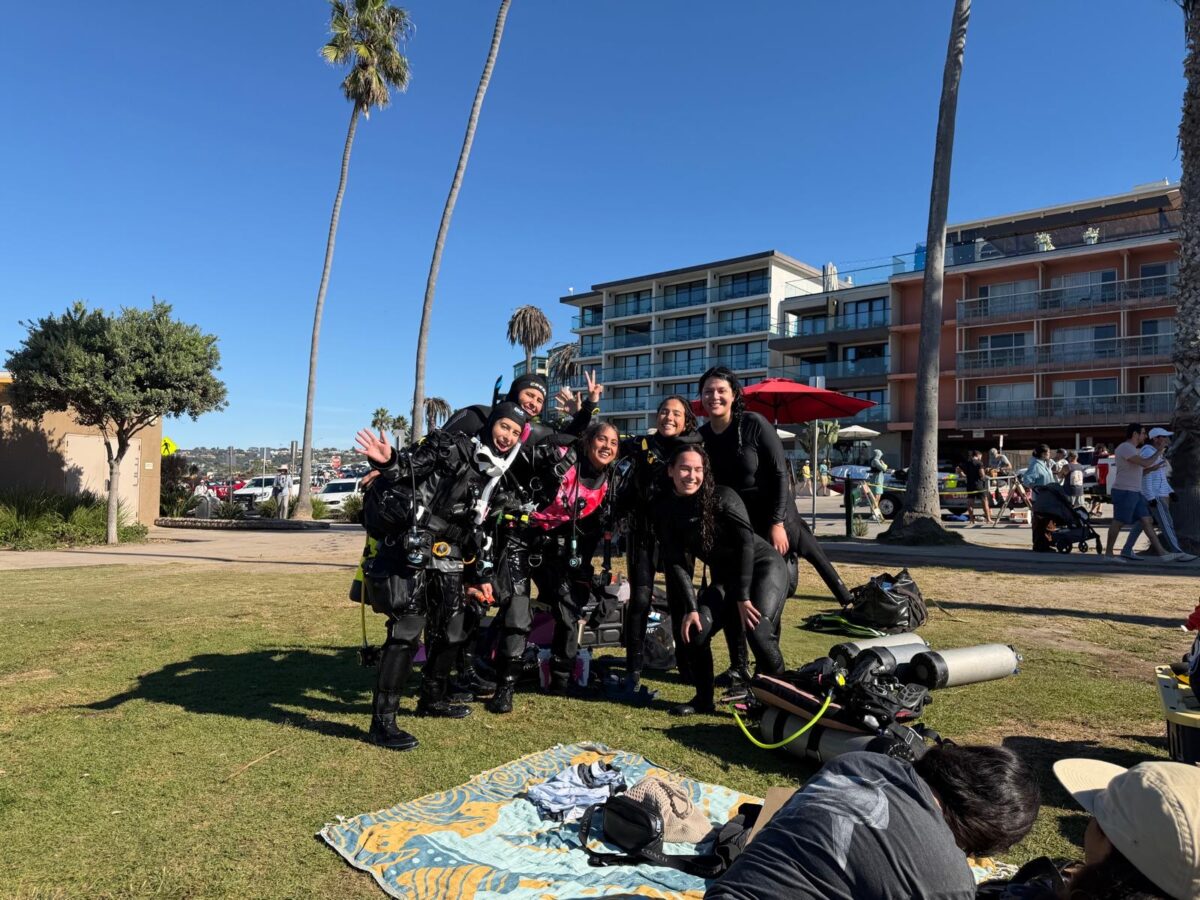
The next day we went to La Jolla Cove and joined the Baja Seasters, a group of Mexican women divers who created a community with the purpose of promoting diving among women. Every month they get together and dive as a community. I was lucky enough to be invited and met many incredible women, especially Jessica Pantoja, who was an OWUSS intern in 2023. It was very heartwarming to dive and chat with another Mexican who is part of the OWUSS family and to learn more about her work surveying kelp forests. Many people stared at us and were surprised to see a large group of only women divers. Meeting this amazing community of Mexican women divers made me reflect on the importance of these spaces. Diving has been historically dominated by men, and even though more women are joining every day, there is still more to do.
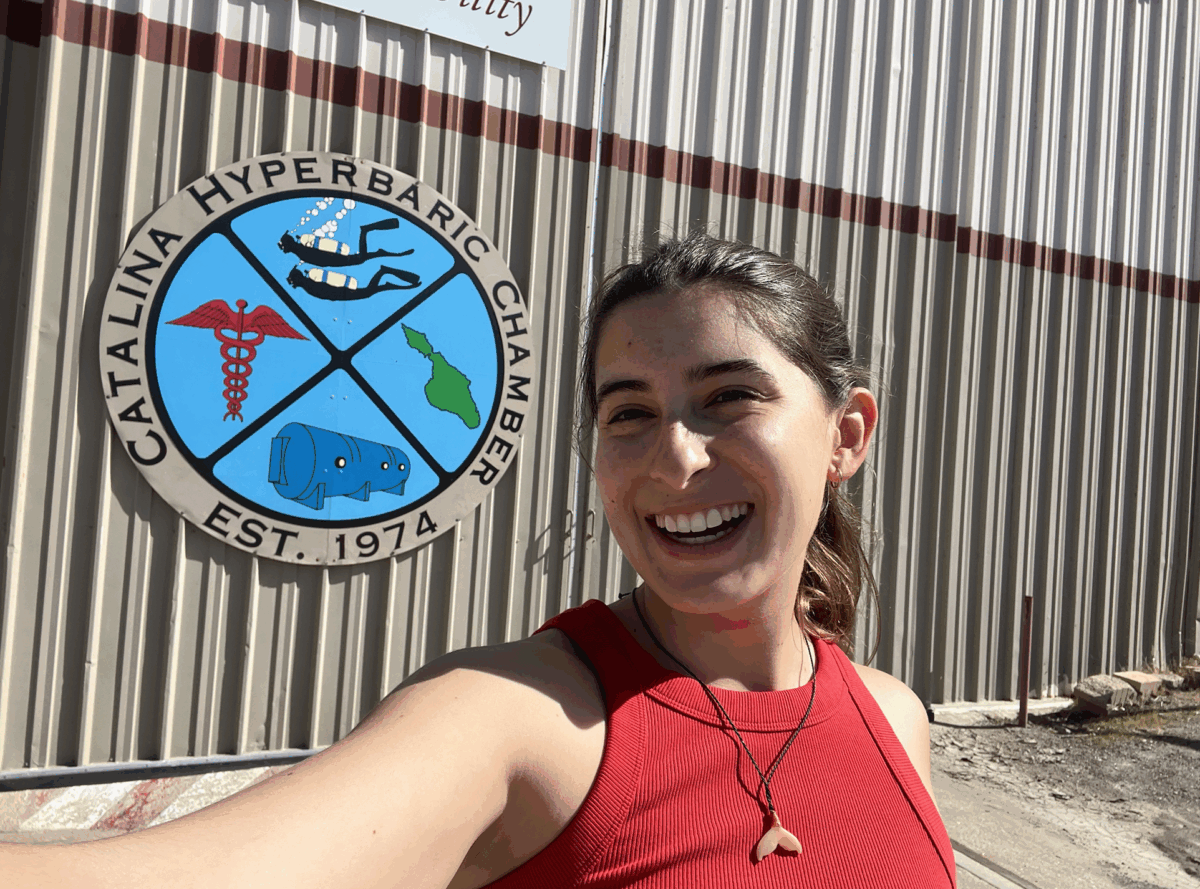
My next stop was Catalina Island, where I met Karl Hughins at the USC Wrigley Marine Station. Karl is the operating director of the hyperbaric chamber and gave me the opportunity to visit it. It was my first time in and around a hyperbaric chamber, and it was so exciting to learn about its function and importance for diving. I saw it from the inside and even got the chance to conduct a test run.
I also did some dives at the USC pier with the DSO, Victoria Sperow. The dives were MAGICAL. I could not believe how clear the water was and how healthy the kelp forest was. I felt like I was in another world, swimming through tall forests. I could not believe the difference between Catalina and Ensenada. Catalina is a protected area and fishing is highly regulated. Here I could see many sheepheads; in contrast, in Ensenada I did not see any. This made me reflect on how protection and conservation can actually influence the environment.
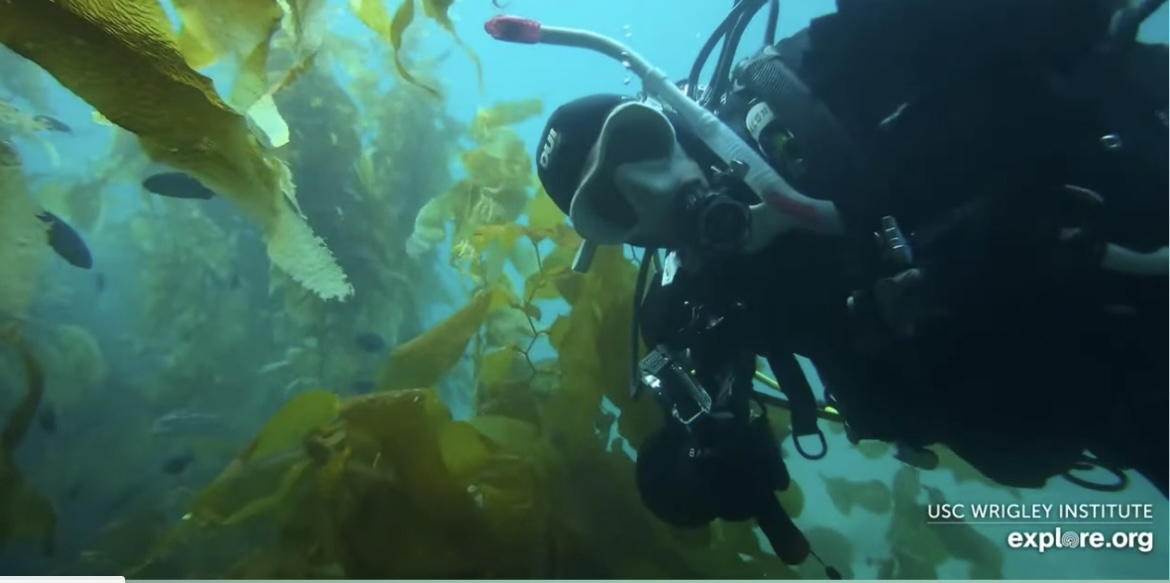
I also joined some lessons with the students at the Marine Station about algae and did some fun activities like cyanotypes. I met Jeff Bozanic and he gave a talk to the students about his diving career as a cave explorer. It was fascinating to listen to him, and after his talk, I explained to the students what I had been doing throughout the year and my experience as an OWUSS scholar.
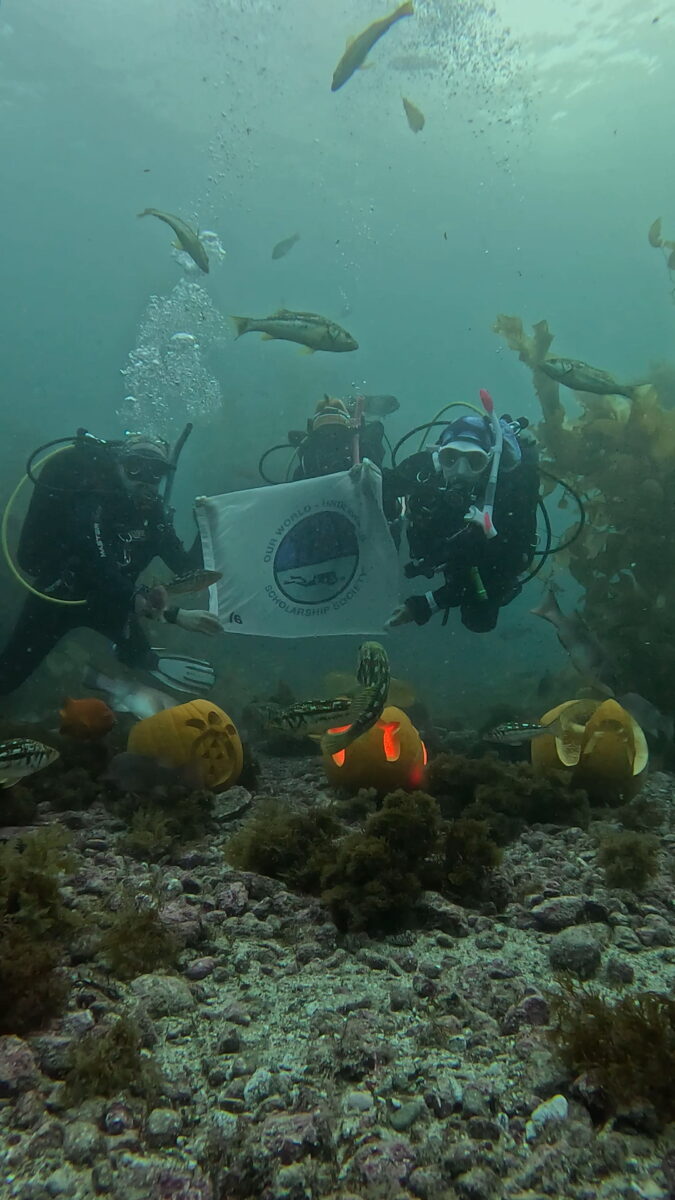
After some days, I went to the other side of the island and visited Avalon, where I met Jemma Paradise, the 2025 Photography Intern who works at Catalina Divers, and Kayla. I did some dives with them and explored different dive sites in Catalina, and because Halloween was approaching, we finished the day with an underwater pumpkin-carving contest! It was my first time pumpkin carving, and the underwater factor plus the loads of fish trying to eat the pumpkin made it even harder, but it was a very fun and unique experience.
The time I spent in California was super useful to practice my drysuit diving skills. I realized diving in a drysuit is very different from diving in a wetsuit, and I still have many things to learn and keep practicing. Here are some lessons I learned: every time I add a layer to my undergarments, I will need to add more weight. Walking and swimming in a drysuit is more tiring than a workout. If you constantly move your head around looking for fish, your neck will end up badly irritated. These things may seem obvious, but they helped me face all of these problems by myself and learn how to solve them. I feel more confident in a drysuit and, even though I will still face new challenges, I am excited to become a better diver, one dive at a time.
A big thank you to Thalía Contreras and Bucea Baja Norte, Karl Hughins and all the USC Wrigley staff. Thank you to Our World-Underwater Scholarship Society for giving me this dream opportunity. Thank you to all my sponsors: Aqualung, Drysuits Unlimited International (DUI), Faith Ortins/Blue Green Expeditions, Fourth Element, and Backscatter for giving me the gear and tools I will need during my year.
