The 2021 NORTH AMERICAN ROLEX SCHOLAR
Jamil Wilson
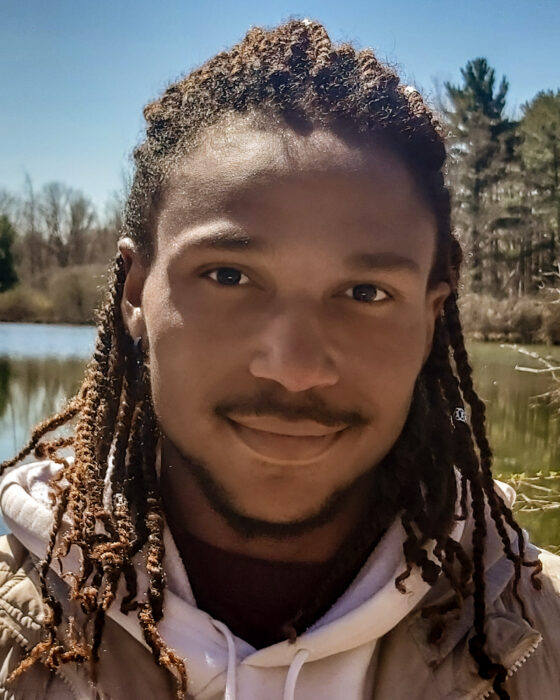
Hailing from Columbus, Ohio, Jamil Wilson often frequented the small creek behind his house as a child and developed a strong fascination with life. As a result, Jamil dreamed of being a scientist and attended college at Cleveland State University.
To support his studies, Jamil balanced being a full-time student while working no fewer than three jobs his entire college career. Jamil began to tutor K-12 kids in predominately Black areas and received the Best Tutor of the Year award during his first year. He also worked at the Greater Cleveland Aquarium, which was the perfect juxtaposition of aquatic biology and teaching, and is where he first discovered the possibility of diving.
While working and going to school, Jamil became a member of several academic groups including The McNair Scholars program, through which he had his first scientific research experience. In 2017, Jamil investigated freshwater mussels in the Ohio Rocky River, with an emphasis on the Leptodea fragilis species, in an effort to determine how populations have changed over a period of 15 years. Later he was awarded a National Science Foundation REU (Research Experience for Undergraduates) at the University of Puerto Rico. While there, Jamil built a successful experiment detailing the effects of severe hurricanes on the abundance of freshwater meiofauna communities. Enthused by his findings, Jamil began working further with specific meiofauna and wrote a research proposal outlining the limitations involved in the biochemical elasticity of tardigrades. Jamil was awarded the opportunity to present his research at conferences at multiple universities, including the University of Chicago and Cornell, and was named as one of Princeton’s 2018 Ecology and Evolutionary Biology Scholar Finalists.
In December of 2018, Jamil graduated with a Bachelor of Science in Biology and a minor in Music from Cleveland State University. With his degree in hand and a deep desire to dive and travel, in 2019 Jamil traveled to six U.S cities, seven different countries and earned his rescue diver certification all in less than a year’s time. In addition, he became a member of the National Association of Black Scuba Divers. In 2020, despite the pandemic, Jamil obtained a virtual internship at the Smithsonian Marine Station and began working elsewhere as an Aquatic Ecologist studying algae.
Now in 2021, Jamil is proud to be a recipient of the OWUSS Rolex Scholarship and looks forward to expanding his involvement in underwater research, discovering more about ecological activism, and further developing his diving and photography skills. In the future, Jamil hopes to educate the public on sustainable solutions to issues facing the underwater world and wishes to provide guidance for other young diverse students who are interested in the pursuit of science, diving and the restoration of our planet’s waters.
The 2019 NORTH AMERICAN ROLEX SCHOLAR
Neha Acharya-Patel
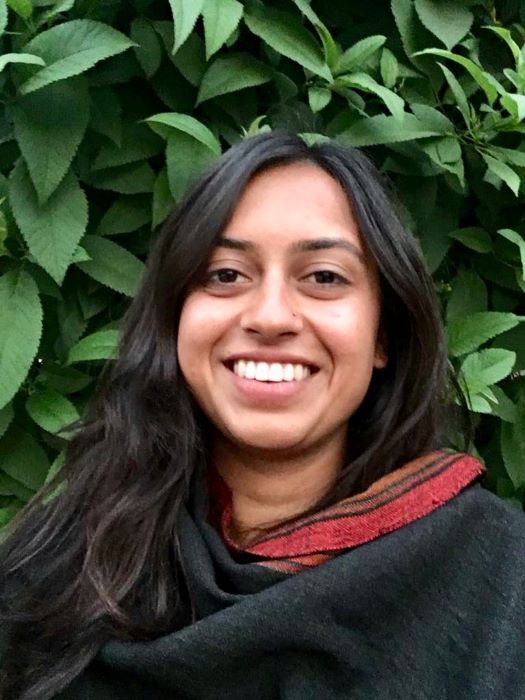
Growing up in Waterloo, Ontario, Neha, now 24, spent much of her summers exploring the lakes and rivers that make up the Great Canadian Shield. Comfortable in the water from a young age, and ever curious about her surroundings, Neha’s interest in aquatic environments naturally extended to the sea. In high school she first took the plunge, and learnt to dive in a snowy little “dive park” – essentially a pond with a collection of sunken refrigerators and toilets.
She did not dive again until 5 years later when she moved to the west coast to attend the University of British Columbia to study Biology with a Marine specialization. There, she was exposed to one of the most diverse temperate ecosystems in the world, and there was no going back. Through university she completed her Scientific Diver training, receiving her CAUS certification, and subsequently participated in a marine ecology course at the Bamfield Marine Sciences Center on Vancouver Island. At this station she also did a study examining elasmobranch cardiorespiratory regulation, which inspired her interest in animal and diving physiology, and resulted in her first academic publication. Following her undergraduate degree, Neha worked as a diver and interpreter in a small catch and release aquarium, where she realised the value of effective science communication, something she hopes to hone this upcoming year.
Neha also completed her PADI divemaster training, which facilitated her next job as a research assistant and divemaster at a research center in Malawi, diving in one of the great African lakes, and monitoring the biodiversity of the evolutionarily fascinating cichlid fish. Through this, she gained technical field and project management skills, and experienced first hand the challenges of running a research program in a developing country with very different cultural expectations. As a second-generation immigrant and avid traveller she believes that true conservation efforts can be made only when certain cultural nuances are understood and acknowledged.
Following her work in Africa, she began working as a research diver and technician with the Hakai Research Institute studying rates of change in temperate coastal ecosystems in the context of an anthropomorphically influenced world. Working there has allowed her to further nurture her passion for the marine world, and cultivate her diving skills.
Becoming this year’s North American Rolex Scholar is a dream come true for Neha. As an aspiring scientist she hopes the scholarship will allow her to explore different research avenues, diving technology, and prioritize communication with the general population in order to inspire change from a wider diversity of people. She aims to take away a well-informed picture of the environmental challenges being faced globally and use this information to make a meaningful contribution to marine conservation.
OUR WORLD-UNDERWATER SCHOLARSHIP SOCIETY’S 2018 NORTH AMERICAN ROLEX SCHOLAR;
Yann Herrera Fuchs
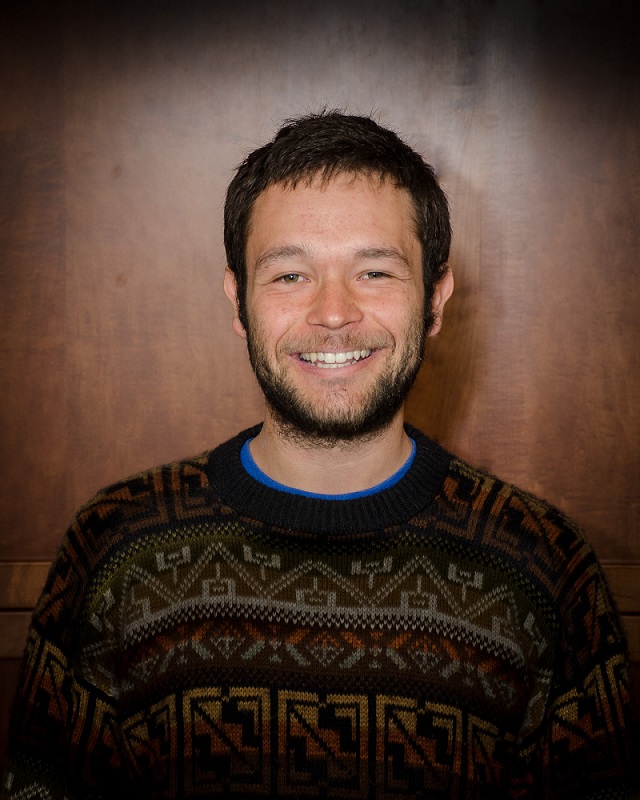 Yann Herrera Fuchs, 24, was born in Cuernavaca, the city of “eternal spring”, only a couple of hours driving from the Mexican coast. His childhood years were spent between swimming pools and the tropical shores of the Mexican Pacific, attempting to swim like a dolphin or trying to hold his breath underwater for long periods of time. At the age of eight, his family moved to Seattle, but not even the cold weather and all the rain stopped Yann from enjoying the ocean. He soon found a hobby in jumping around tide pools searching for jellyfish, sea urchins and starfish. Yann eventually moved back to Mexico City, but the longing for closer contact with the ocean brought him to Vancouver, Canada, a few years later to seek a degree in Environmental Science from the University of British Columbia (UBC).
AT UBC Yann focused on economic, social, and environmental sustainability. He spent time in Costa Rica working with a volunteer organization on a turtle conservation project, patrolling beaches at night and relocating turtle eggs safely to keep them away from poachers. This field experience triggered his passion for marine conservation. He completed his open water diver’s course in Mexico, diving for the first time in the harbor of Veracruz. Yann was stunned by the abundance of coral and marine life that was present despite being situated near a major industrial port. Acknowledging the resilience that aquatic life can have with good conservation measures made him feel empowered to make a difference in Mexico’s efforts to preserve nature. This fueled his need to continue diving and discovering the country’s marine treasures. Despite the logistical and financial barriers of diving, Yann attempted to explore different underwater settings. In Quintana Roo, he submerged himself in cenotes, cavern-like orifices that connect the subterranean waterways of the Mayan coasts. He also got certified for dry suit diving in Canada. During his final years at UBC, Yann served as a research assistant working on an indigenous fisheries project and was awarded a grant to take a sustainability field course in Iceland.
After graduating, Yann made the leap back to Mexico and began working for World Wildlife Fund, where he got closer to the fishing sector, government and coastal communities of Baja California. His lead project focused on developing alternative fishing gear in the Upper Gulf of California as a response to protecting the endemic vaquita porpoise, considered the world’s most endangered marine mammal. He also participated as a diver in shark monitoring programs, reef clean-ups and ecosystem health assessments. Yann insists that community efforts and underwater education are key for preventing further disconnection between people and our natural water resources. The 2018 OWUSS Rolex Scholarship is a great opportunity to explore this idea and transmit a sense of stewardship back to the people that have lost this connection.
OUR WORLD-UNDERWATER SCHOLARSHIP SOCIETY’S 2017 NORTH AMERICAN ROLEX SCHOLAR;
Leah Potts
For as long as Leah can remember, water has been her close friend. Born 22 years ago in Blacksburg, Virginia, Leah’s earliest memories are of splashing around on the banks of the New River and competing in her local swim league. In high school, she discovered the magic of scuba diving and pursued an open water certification in St. John, USVI, on a family vacation. Those first few certification dives were just the beginning of a passion that has only intensified over the past seven years.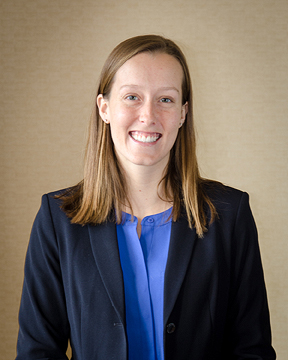
Leah began college in her hometown at Virginia Tech and promptly became president of the scuba club. As president, she worked with her local dive shop to help create a thriving dive community in the Blue Ridge Mountains, far from the nearest ocean. During this time, she discovered her love for sharing diving with others and swiftly rose through the certification ranks to become a divemaster. An insatiable appetite for bottom time was born, and she soon realized that she wanted to be able to dive deeper and stay longer, which led to her pursuit of technical and cave diving at the age of 18.
Unable to get enough of the underwater world, Leah took a pause from school to work as a divemaster in the Florida Keys. The hard work of the high season was everything she dreamed it would be, and each day was a new adventure as she helped people experience their first breaths underwater or guided seasoned divers around beautiful marine sanctuaries. As much as she loved the salty Keys, her love for learning and the spring-fed caves of North Florida continued to call for her, and she returned to school at University of Florida (UF), where she is graduating this April with a Bachelor of Science in Agricultural and Biological Engineering.
At UF, Leah has balanced her studies with weekends spent exploring the miles of cave passage hidden beneath her very feet. She quickly fell in love with the close-knit cave diving community, which prompted her to start thinking of ways she could give back to it. In 2015, through a Divers Alert Network research internship, Leah spent six months researching cave diving fatalities and learning about diver physiology through intense field work.
Leah’s interests lie in diver education, research, and exploration – as well as effective written and visual communication about these areas that make the underwater world a more accessible and safer place for all. She says: “Water has given me so much – life, peace of mind, passion – that there is nothing more that I want than to impact it in return in a positive way.”
OUR WORLD-UNDERWATER SCHOLARSHIP SOCIETY’S 2016 NORTH AMERICAN ROLEX SCHOLAR;
Chris Millbern
Chris Millbern is a latecomer to the underwater world, but his passion for diver safety and adventure has made him a natural fit for the Our World-Underwater Scholarship Society’s Rolex Scholarship Program.
Born 26 years ago in Newport Beach, California, Chris was raised on ocean swims and thousands of viewings of National Geographic’s “Really Wild Animals: Deep Sea Dive” VHS tape, which he of course still holds on to today. Majoring at UCLA in Ecology, Behavior, and Evolution, Chris became a concerned conservationist and backpacking guide, combining his love of adventure sports, photography, and the biological sciences in any way possible. Research was his mission; while enrolled, Chris participated in studies involving Belizean crocodilian parasitology, the effects of anthropogenic noise on Nicaraguan spider monkeys, heavy metal poisoning in Arizona rattlesnakes, as well as earning the Santa Monica Audubon Society Research Award for his work on anticoagulant poisoning in local bobcat populations. He learned a deep appreciation for the importance of protecting our environment, but he missed the ocean and his young dreams of exploring with National Geographic simply didn’t look possible.
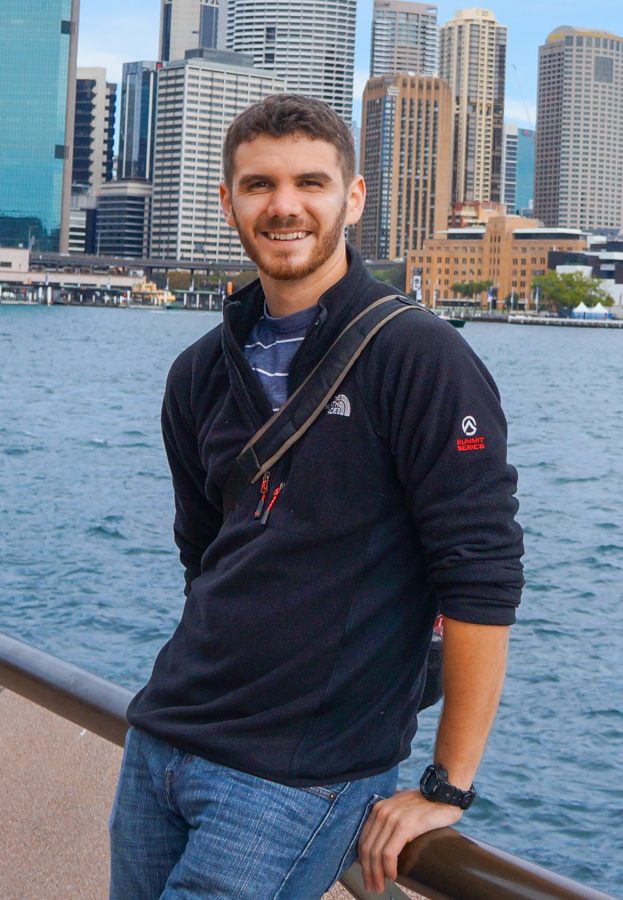
It wasn’t until a spontaneous Open Water class his senior year that everything changed. Realizing how much he was missing by living on the surface, Chris became instantly dedicated to making the world of diving his own. In the next two years, he would become a PADI Rescue Diver, AAUS Scientific Diver, and join the UCLA Gonda Center for Wound Healing and Hyperbaric Medicine as an E.M.T. and Certified Hyperbaric Technologist. Working with patients in hundreds of chamber dives, he became enamored with hyperbaric medicine and took every opportunity to teach it. He has given educational talks to local dive shops, high school programs, visiting physicians, and even the 95th Aerospace Medical Squadron from Edwards Air Force Base.
While working at the chamber, Chris became involved in a number of research initiatives focused on diver safety concerning transport of injured divers, nation-wide hyperbaric oxygen therapy (HBOT) availability, and emergency equipment testing. Most importantly, he was introduced to a problem facing artisanal fishermen in Mexico: equipped with tool-grade air compressors, surface-supplied hoses, and little to no safety precautions, divers’ air sources were being contaminated with engine exhaust and annual decompression illness rates exceeded 75% of the diving population. Under the leadership of the UCLA Hyperbaric team, Chris helped design and machine in his own garage an effective snorkel that could elevate the intake above the exhaust fumes, but was also detachable, made of inexpensive and common materials, and drastically reduced carbon monoxide concentrations. Chris was later invited to the Yucatan and worked with community leaders to install these devices and measure their effectiveness. In addition, they taught safer diving practices and oxygen delivery for injured divers. Today the design and lessons have spread to multiple cities and fishing cooperatives, and will hopefully continue to save lives for years to come. Seeing the enormous variance in diving practices and equipment, Chris has made it his life goal to continue introducing safe diving practices and innovative solutions to problems facing divers around the world. In doing so, he hopes to always place focus on incorporating the local cultures, communities, and needs of divers to create lasting effects and sustained progress wherever he goes.
As a newly minted Diver Medic, Chris has begun working with ecological survey groups across the California coast. Balancing his love of conservation and hyperbaric medicine, he first wants to develop his skills as a diver so as to better contribute to the teams and projects he works on. Encouraging marine preserves through responsible ecotourism, driving research and public policy towards pragmatic solutions, and bringing a love of the ocean to a new generation of divers are all things Chris hopes to achieve. Most importantly, he wants to give back: “The underwater world has given me a sense of purpose and the community has given me a home. All I really want is to keep the environment safe, and the people who protect and enjoy it even safer.”
OUR WORLD-UNDERWATER SCHOLARSHIP SOCIETY’S 2015 NORTH AMERICAN ROLEX SCHOLAR;
Michele Felberg
Michele Felberg, from Houston, Texas, always had an affinity for water but didn’t quite grasp her love for the underwater world until her years earning a Bachelor of Science in Environmental Studies and a minor in Economics at the University of Southern California. It was during her sophomore year that she realized the magnitude of her passion and curiosity through her participation in two new Environmental Studies courses. First, in the Intro to Scientific Diving course she earned her NAUI Open Water certification as well as the AAUS scientific diver certification. In the second course, Integrated Ecosystem Management in Micronesia, she intensively studied the marine ecology, biodiversity, and conservation management of Micronesia and then travelled to Guam and Palau for a field research trip to evaluate coral reef health. Data collected in this research were used, in part, as justification for listing Palau’s Southern Lagoon as a World Heritage Site.
This experience opened Michele’s eyes to the beauty and complexity of the marine world and she decided to pursue a concentration within the Environmental Studies department called “Oceans, Life, and People” which focused her studies on the underwater world.
She spent half of her junior year in New Zealand, where she studied marine science, conducted research on freshwater macroinvertebrate populations and stream health, and sparked her love of adventure traveling. As a senior she worked as a research assistant on a seagrass-monitoring project in Big Fisherman’s Cove on Catalina Island, examining monthly fluctuations in seafloor coverage of a foundation species of seagrass, Zostera marina. Michele presented the results of this research at the annual Southern California Academy of Sciences symposium. Supplementing her research diving, she earned her Rescue Diver and Training Assistant certifications during the fall of her senior year. The few weekends of her senior year Michele didn’t spend diving on Catalina Island, she was heavily involved in an organization called SC Outfitters, leading students on hiking and camping trips around the Southwest US, sharing her passion for the great outdoors and exploration.
During her last semester at USC, Michele was asked to serve as a Teaching Assistant (TA) for the two environmental studies courses that initiated her interest in the underwater world. This position is rarely offered to an undergraduate. While assisting in the teaching of academic content and class logistics, Michele helped with the dive training of the new students and earned her Divemaster certification. Immediately upon graduation, she returned to Micronesia as a TA for the USC summer research field course in Palau.
At the end of the class she was offered a position as a Dive Guide/ Underwater Naturalist at one of the top dive centers in Palau. Her work in Palau has fed her love for experiencing new cultures, diving, and sharing the wonders of the underwater world with the guests she guides. She has opportunities to assist visiting researchers with their projects and was instrumental in developing a lecture series to inform guests, from a scientific perspective, about the local fauna, flora, and reef ecology. In addition, living in Palau has given her a greater appreciation for the power of local communities tied to the oceans and a better understanding of the importance of incorporating local knowledge with scientific research. On the few days a month she doesn’t dive, Michele enjoys reading a good book, going on runs, exploring the land attractions of Palau, and wishing she was diving.
One of Michele’s long-range goals is to provide a legacy of relentless pursuit of the conservation and protection of the oceans by fostering within others a mindset that every individual can make a positive impact on marine conservation.
OUR WORLD-UNDERWATER SCHOLARSHIP SOCIETY’S 2014 NORTH AMERICAN ROLEX SCHOLAR;
Ana Guerra
Ana Sofia Guerra, 24, was born in Monterrey, Mexico, an arid city far away from the ocean. When she was 9 years old she moved to Dallas, TX for a year and a half and later to São Paulo, Brazil. In Brazil she discovered her love for the marine world through Projeto Tamar, a local sea turtle conservation NGO. She pursuaded her parents to let her take scuba lessons and she became a certified PADI Junior Open Water Diver at the age of twelve.
Ana moved to Mexico City two years later and completed high school before moving to California to attend Stanford University.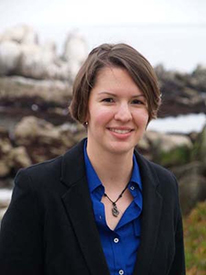
Through Stanford, Ana obtained a Bachelor’s Degree with honors in Biology, specifically focused on ecology and evolution. During the summer of her sophomore year she worked as a field assistant on Palmyra Atoll in the Central Pacific through Hopkins Marine Station, Stanford’s Marine Biology Station in Monterey Bay. Snorkeling on Palmyra’s reefs convinced Ana to immediately change her previous plans to finish her degree on the Stanford campus and instead she spent her junior year in a study abroad program in Australia and taking classes at Hopkins Marine Station.
During her time at Hopkins, she obtained her Advanced, Rescue, and AAUS Scientific Diver Certifications and spent as much time as possible exploring California’s kelp forests. Ana returned to Palmyra the summer of her junior year to conduct research on her honors thesis project focused on the feeding ecology of Bristle-thighed Curlews (Numenius tahitiensis), an endangered species of shorebird, on the lagoon flats of Palmyra Atoll. While on the island, Ana was offered a volunteer position for the following fall by Palmyra Atoll’s U.S. Fish and Wildlife Service Refuge Manager. She immediately filed a leave of absence from school, jumping at the opportunity to spend two months working on the remote atoll eradicating an invasive corallimorph that is threatening to destroy Palmyra’s extensive reefs.
Back in California, three months away from graduation in June of 2013, Ana was offered the opportunity to work as a Teaching Assistant for the Stanford@SEA course that was to start in the spring. Once again putting school on hold, she sailed with and mentored students for five weeks aboard the SSV Robert C. Seamans, a 134-ft tall ship, from O’ahu to the Northern Line Islands. Upon return to land, Ana made her way down to Baja California Sur, Mexico to help on a project studying small-scale fisheries and had the opportunity to interview and work closely with fishermen in Mexico.
Ana graduated from Stanford in December of 2013 after spending most of her final quarter working as a research technician at Hopkins Marine Station.
Ana is honored to be the 2014 North American Rolex Scholar of the Our World-Underwater Scholarship Society and she looks forward to exploring new areas in marine science as well as developing skills in communication and photography. She hopes to use what she learns to influence marine conservation practices, make the ocean more accessible to those who don’t have the opportunity to delve into it, and bridge the gap between the marine scientific community and the public.
OUR WORLD-UNDERWATER SCHOLARSHIP SOCIETY’S 2013 NORTH AMERICAN ROLEX SCHOLAR;
Jeff Hester
Jeff Hester, 24, was born in Anaheim, California, and moved to Portland, Oregon, when he was 10 years old. He developed a love for the water early on and would dive for keys, coins or other trinkets at the local pool at the ripe age of 2. Growing up, Jeff developed an insatiable love of the ocean through books pertaining to marine animals or life at sea as well as visits to the tide pools at nearby Cannon Beach.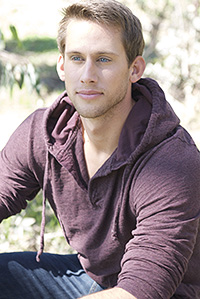
A yearning for exploration of the underwater world fuelled his desire to learn how to SCUBA dive after moving to sunny San Diego to attend Point Loma Nazarene University.
During his college career, Jeff competed on the varsity track and field team, earning All-American honors in the decathlon at the national championships his senior year. He interned with the Scripps Institution of Oceanography in a coral reef ecology lab that was developing a non-invasive method to measure surface area using photography to create 3-dimensional models.
The following year, driven by his love for diving and marine science, Jeff sought opportunities for underwater research through the National Science Foundation-funded Research Experience for Undergraduate (REU) programs. He was selected for an AAUS diving internship with the Shannon Point Marine Center in Anacortes, Washington, to survey and assess pinto abalone outplant sites in the San Juan Islands, as part of an effort to restore their population.
During that summer, he completed his advanced, nitrox, drysuit, rescue and AAUS scientific diving certifications. Since then he has added wreck and divemaster certifications to his credentials.
In his final year of college, Jeff conducted senior thesis research with the National Oceanic and Atmospheric Administration (NOAA)/Southwest Fisheries Science Center (SWFSC) investigating heavy metal concentration in the long-beaked common dolphin (Delphinus capensis) and how it related to their health. After graduating with a BS in Biology he was hired by NOAA as a lab technician in a marine mammal genetics lab. He uses genetic techniques to study Gray Whale and Beaked Whale population structure.
Through all of these experiences, Jeff has developed a passion for diving and marine biology. He is eager to work with leaders in these fields so that he can better understand the issues faced by the oceans and what we, as the human race, can do about them.
He wants to make a positive difference in this world and in the oceans that are all too often taken for granted, by instilling in others the same love and curiosity for the ocean that he has. He feels that he has the responsibility and privilege to share what he has been taught so that others may understand, love, and in turn, conserve.
OUR WORLD-UNDERWATER SCHOLARSHIP SOCIETY’S 2012 NORTH AMERICAN ROLEX SCHOLAR;
Megan Cook
Megan Cook, 24, was raised in Boise, Idaho more than 500 miles from the nearest ocean. Growing up in an athletic, water-loving family, she developed a zest for adventure and respect and curiosity about the natural world long before the ocean came into her life.
An inspired first-grade teacher first fostered Megan’s ocean interest with crayon-scribbled current patterns, marine life stories and shell math. As other kids made “grown up plans” to become firefighters, business leaders, or sports stars, Megan knew she and the sea were meant to be together. At age 16, Megan was selected as the top international ambassador of a young women’s leadership organization. Traveling nearly 100,000 miles worldwide, Megan gained confidence as a spokeswoman and presenter and broadened her goals for the scale of impacts she hopes to make in the world. This experience will also prove invaluable to her Scholarship year as she is already an old pro at napping during layovers on awkward airport benches.
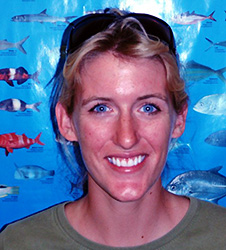
Megan graduated Magna cum Laude in 2009 from Oregon State University with a Bachelor of Science in Biology, a minor in Chemistry, and an option in Marine Biology. During college she edited The Catalyst, a journal promoting undergraduate research, and walked onto two Division-I sports teams: rowing and equestrian polo.
Initially scuba certified in an Idaho freshwater reservoir, Megan bubbled her way to further confidence and PADI Advanced, Rescue, Drysuit, AAUS and Divemaster certifications in the temperate waters of the Pacific Northwest with the OSU Diving Program. Eager to explore more of the ocean, Megan became an international scholar on exchange to James Cook University in Australia. Upon her return, she enrolled with Sea Education Association, studying in Woods Hole, MA and later sailing a tall-ship research vessel from Tahiti to Hawaii. She worked in the reef fish ecology lab of Dr. Mark Hixon and spent a research season diving in the Bahamas to quantify the impacts of the Indo-Pacific lionfish invasion on native predators and communities. After earning her degree, Megan relocated to Hawaii to work as a freediver on NOAA’s Marine Debris Team throughout the Papahanaumokuakea Marine National Monument.
Her desire to make a positive contribution to the underwater world led her to work on the state’s aquatic invasive species team and as a trainer for the University of Hawaii Scientific Diving program and a community reporting network for coral disease and bleaching outbreaks.
The science and exploration of the ocean fascinate Megan, as does the communication of this knowledge. A scientific extrovert, Megan seeks opportunities to foster bridges between research, media, conservation, industry and exploration. She is especially interested in large-scale ocean issues such as marine debris and invasive species management because of the variety of stakeholders who can be involved in seeking solutions.
Megan has received recognition in university-wide and regional symposia, for most outstanding presentation and best seminar for ecology and marine biology. She seeks to explore photography and video documentaries as communication tools during her scholarship year. She believes the ocean is anxious to tell her story, and public awareness is the first step to creating change. Megan hopes to work with diverse groups to further understand and better communicate the wonder, vitality, and drastic changes alive in today’s underwater world in accessible, innovative ways.
Megan is humbled and enlivened to be spending this year among this prestigious network of underwater leaders and looking forward to learning absolutely everything she can absorb.
OUR WORLD-UNDERWATER SCHOLARSHIP SOCIETY’S 2011 NORTH AMERICAN ROLEX SCHOLAR;
Christian Clark
Christian Clark, 23, was born in Atlanta, Georgia but spent his early years living with his family in Brazil and Canada before finally moving back to Georgia.
From the beaches of Southern Brazil to the Ottawa and St. Lawrence rivers to the central Pacific, the one constant in Christian’s life has always been water. He recalls that when he was about 5 years old, on a whale-watching cruise with his family, he saw a pod of belugas and had an up-close encounter with a huge Fin whale. It was from this point forward that Christian knew he wanted to be immersed in the oceans for the rest of his life.
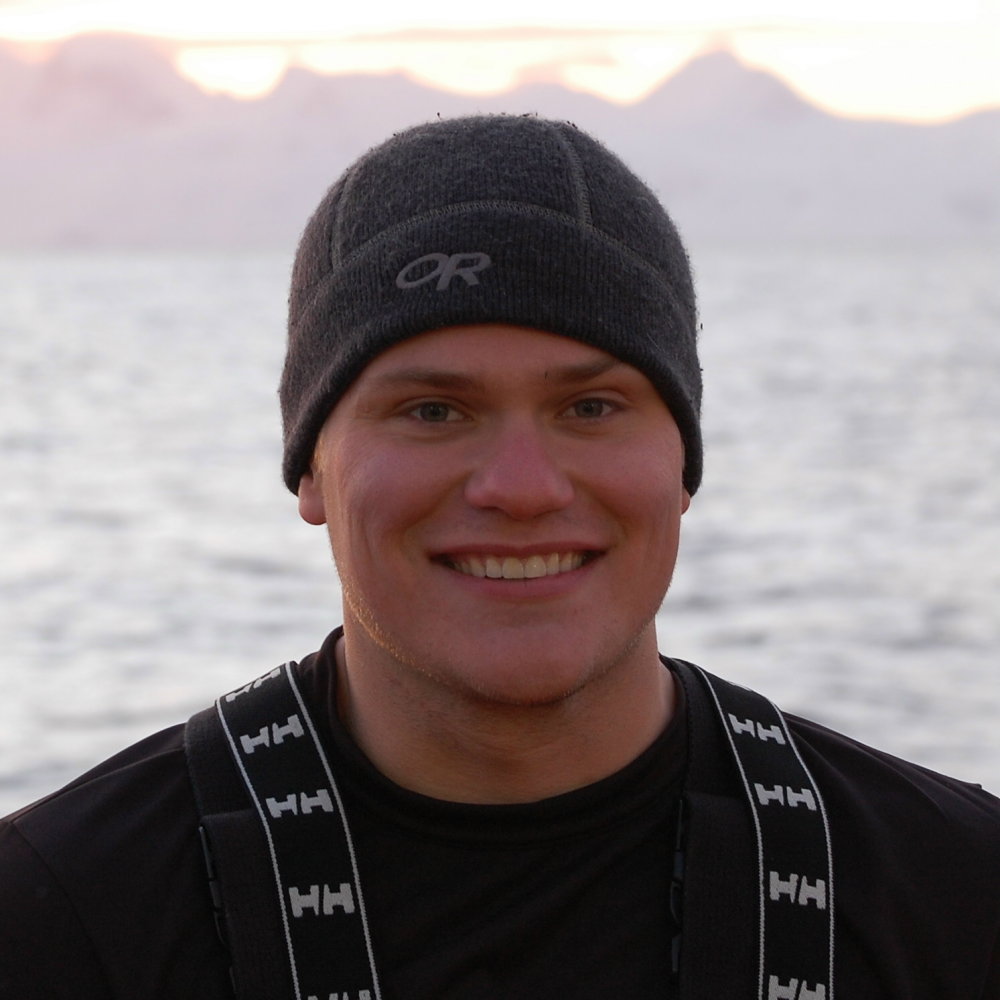
During a family trip to Maui when he was 13, Christian discovered scuba diving and the wondrous Hawaiian underwater world. Consequently when it came time to go to college, his choice had already been made and he headed to the University of Hawaii (UH). After taking every ocean-related course he could find, Christian finally discovered Global Environmental Science, an interdisciplinary science program, and UH’s Marine Option Program. In August 2010 Christian graduated with a BS in Global Environmental Science.
Christian’s years at UH were packed with volunteer work, research cruises, and scientific diving. He volunteered at the Hawaii Institute of Marine Biology’s Shark Lab, where his duties ranged from cleaning shark enclosures to deploying/ retrieving underwater receivers to capturing and tagging sharks. He joined UH’s scientific diving class, later becoming an assistant trainer, and was selected for the rigorous diving field school QUEST (Quantitative Underwater Ecological Surveying Techniques), eventually becoming an instructor in this program as well.
Working as a research assistant in the Holland Pelagic Fish Lab, he helped quantify the movement of sharks and other apex predators around the Main Hawaiian Islands and Northwestern Hawaiian Islands. As a result of this research, Christian co-authored two journal articles. Christian participated in three research expeditions to Antarctica, where he studied climate change effects on benthic ecology. This research became the basis of his senior thesis as well as two more articles, which are pending publication. His presentation of his senior thesis project at a university-wide symposium earned an award for best science presentation.
Christian’s experiences in Antarctica led him to realize the importance of communicating scientific research issues and solutions to non-science people. He began filming and photographing on every research trip and attended a field school on environmental science documentary film production. He created a documentary on spear fishing and Marine Protected Areas which earned awards for Best Cinematography and Most Powerful Message. He later served on a joint committee of university and local media representatives studying ways to educate students and the public about scientific issues through documentary films.
He and the university chancellor had the honor of meeting with Senator Daniel Inouye and the Chairman of the FCC to communicate the results of this collaboration.
Christian has been diving for ten years and has logged over 320 dives. He is a Scientific Diver Trainer with UH’s Diving Safety Program. He earned his NAUI Divemaster certification in 2009 and has gained skills in underwater mapping techniques and technical diving. He is an avid sailor and boatman, and even lives on a sailboat. Christian is thrilled and honored to have been selected as OW-USS’s 2011 North American Rolex Scholar.
He hopes to explore possible careers which would combine his diving, research, and media communication skills to the best advantage. He is excited to jump into his scholarship year and wonders, “What if I could energize the public and politicians enough to actually make a change on a global scale?”
OUR WORLD-UNDERWATER SCHOLARSHIP SOCIETY’S 2010 NORTH AMERICAN ROLEX SCHOLAR;
Joshua Stewart
Josh was born and raised in New York City, far from the sandy shores of the tropical oceans he now loves. His initial interest in the marine world was probably fostered by elementary school teachers who insisted on having “whale time” once a week, but his passion for all-things-ocean certainly developed during summers spent in the Caribbean, sailing, scuba diving and enjoying everything the turquoise waters have to offer.
 By the time he was ready for college, Josh had decided that a career in marine biology was the only option. Little did he know that he would get his start at Indiana University, more than 600 miles from the nearest coast. During his freshman year Josh became involved with the Underwater Sciences Program and took his first scientific diving course. Recognizing Josh’s passion for marine biology, his professor directed him to IU’s Individualized Major Program, which would allow him to design his own degree program. Josh completed an intensive marine biology curriculum at James Cook University in Australia and was a member of several international field research teams working on underwater archaeology and biology projects in the Caribbean. In May Josh will become Indiana University’s first student to graduate with a degree in marine biology. He also has minors in Biology and Anthropology and a Certificate in Underwater Resource Management.
During his studies at IU, Josh worked on projects ranging from Marine Protected Area management to biological and ecological studies to anthropological investigations. He made numerous trips to the Dominican Republic where he was part of a team that excavated and interpreted Captain Kidd’s shipwreck, recovered extinct mammal remains in culturally significant fresh-water caverns, and worked to protect Columbus’s first settlement in the Caribbean. Josh’s personal research for his degree focused on coral recruitment on artificial substrates and methodological approaches to the management and monitoring of submerged resources. Josh has logged almost 300 dives and is a PADI Assistant Instructor. This past year Josh was hired by IU’s Office of Underwater Science as an adjunct faculty lecturer teaching scientific diving to undergraduates.
Josh is very interested in utilizing public outreach and education as a conservation tool, specifically through film and television. He has developed a passion for underwater videography which he hopes to use for conservation and the protection of natural resources by educating the public on a large scale. As a first step, in December 2009 he travelled to a remote region of Indonesia to film a documentary sponsored by Indiana University and Australian Geographic about modernization and its effects on the marine environment. Josh believes that the most pressing issue for conservation is a lack of public knowledge about the current environmental problems we face. He hopes to use the scholarship as an opportunity to explore different careers relating to conservation and to bring some of the most critical environmental issues to the attention of the public.
OUR WORLD-UNDERWATER SCHOLARSHIP SOCIETY’S 2009 NORTH AMERICAN ROLEX SCHOLAR;
Myfanwy Rowlands
Myfanwy, 23, grew up in the gold-rush town of Nevada City, California. While many of her friends found themselves pulled to the snow sports of the nearby Sierras, Myfanwy was drawn to the Pacific Ocean. As a young child she was fascinated by whales and dolphins, so when she was fourteen she jumped on the opportunity to attend a marine biology camp on the island of Roatan, Honduras. She earned her open water diving certification that summer and her advanced open water the next. She returned to the program in Roatan four times, eventually receiving her NAUI Divemaster certification in 2005. Her Roatan experience started her on the path she has travelled since. Now, nine years and 400 dives later, she has added scientific diving to her underwater experience and has acted as a Divemaster in three different countries. Myfanwy finds the role of Divemaster immensely rewarding, particularly when she has the privilege of working with young divers and students.
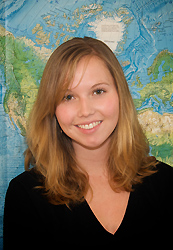 Myfanwy attended Loyola Marymount University in Los Angeles for two years before transferring to the University of California at Berkeley, where she is currently completing dual degrees in Marine Science and Conservation and Resource Studies. She is interested in finding common ground between the disciplines of biology, marine conservation, and political ecology. While in her third year of college, she studied abroad in French Polynesia and completed an individual research project examining assemblages of foraminifera in fouling communities. This past fall, she traveled to Papua New Guinea where she conducted coral reef conservation and management research with the Wildlife Conservation Society.
Myfanwy’s main enthusiasm outside of marine biology has been photography. She is very much enjoying teaching a Conservation Photography course at UC Berkeley this semester. She hopes to use her photography to bear witness to the marine conservation issues and ocean crises she encounters during her scholarship travels.
Although Myfanwy found her focus on the marine sciences early and has followed that path unwaveringly, she believes strongly that life is about achieving a balance of passions, and is constantly trying to find ways to juggle her many interests: music and songwriting, theatrical lighting and sound, volunteering, teaching, almost every kind of exercise, and yes, knot-tying. “As the essential shared natural resource, the ocean should be the gathering point for all countries and cultures. The Rolex Scholarship will help me discover what it is to play an active, significant role in marine conservation, by placing me side-by-side as an eager apprentice with those who are already making a difference.”
